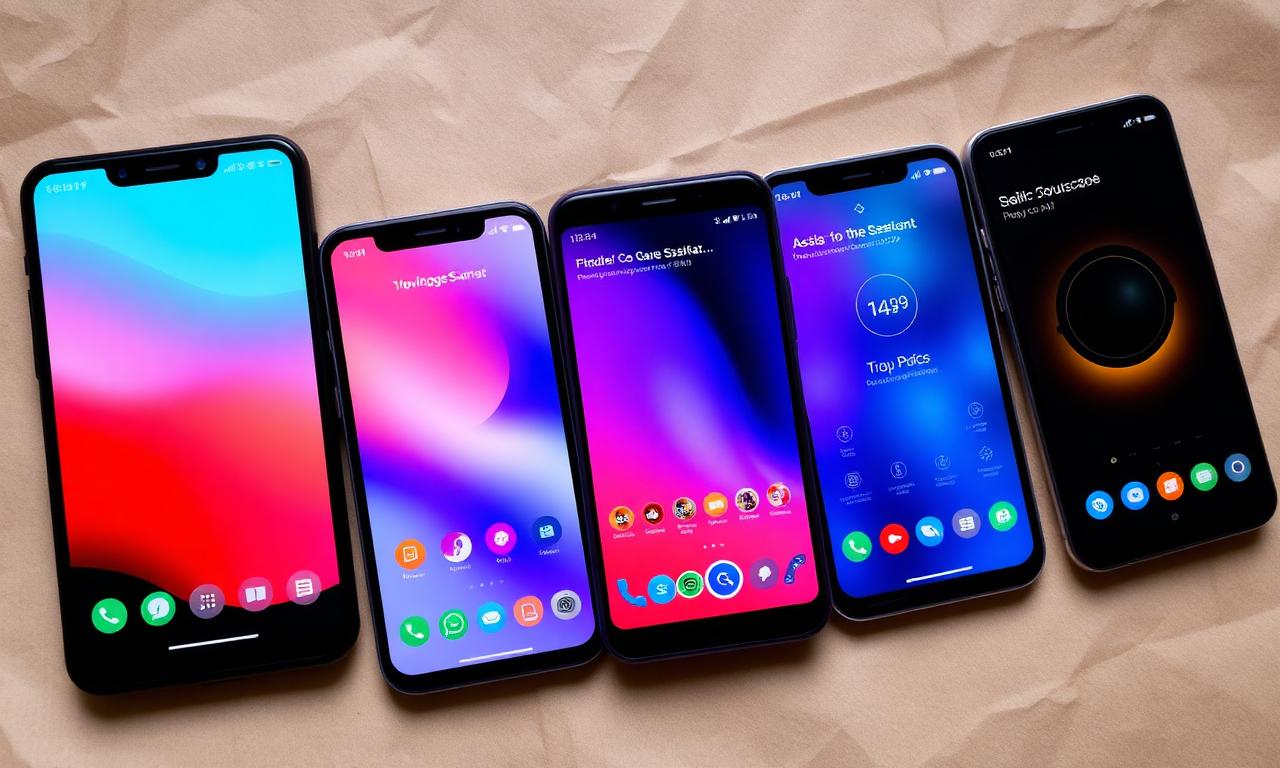
For most of the chatbot era, voice was a checkbox feature — a nice add-on for accessibility and hands-free driving, but not the default modality. That is changing quickly. Usage data from every major consumer AI product shows voice sessions growing faster than text sessions, and in several apps voice is now the plurality modality for daily active users.
What flipped the curve
The latency improvements of the past eighteen months are the proximate cause. When a spoken response could take three seconds to arrive, voice felt like a compromise. Sub-second first-token latency, streaming synthesis, and interruption-aware turn-taking have collectively made voice conversation feel closer to talking to a person than to talking to a machine. Once the interaction stops feeling awkward, users default to it.
The second driver is context of use. People carry their phones into rooms where typing is inconvenient — kitchens, cars, gyms, hallways between meetings. Voice unlocks those contexts. And once the user has adopted voice for those moments, the friction of switching back to keyboard for a longer session starts to feel disproportionate.
What breaks
Voice-first surfaces expose weaknesses that were easy to paper over in text. Hallucinations feel worse when spoken confidently. Long, structured responses that read well as bulleted markdown are unlistenable. Interfaces that assume the user can see a screen — 'here's a table' — degrade when the screen is not being looked at. Product teams building voice-native experiences are relearning old lessons from the phone-tree era: brevity, confirmation, graceful failure.
- Response length has to drop sharply for voice; text-first defaults are too long.
- Confidence calibration matters more when the user cannot skim.
- Handoff between voice and screen — 'show me on the map' — is the hardest interface problem.
“Voice is not a new modality for chatbots. It is a different product with the same brain.”
Hardware implications
Every ambient hardware bet that stalled a few years ago is being reconsidered. Wearables, earbuds, in-car assistants, and desk devices are all seeing renewed investment. The category has not converged on a winning form factor, but the assumption that the smartphone will remain the sole voice-AI surface is looking less durable than it did.
What to watch
The most important product question is whether voice AI develops its own dominant interaction pattern or remains a thin layer over text-first products. If the former, expect a new generation of voice-native apps that look almost nothing like today's chatbot UI. If the latter, voice becomes a distribution channel rather than a category.
Key Topics
Extended Knowledge
- Sub-second latency is the threshold that unlocks conversational feel.
- Voice-native response design is a distinct discipline from text-first prompt design.
- Wearable form factors are seeing renewed venture interest after several fallow years.
Frequently Asked
Probably a large part of it — but not to the exclusion of text. Most users will move fluidly between modalities.
The underlying LLM can be the same; the response design, latency budget, and evaluation criteria differ substantially.
End-to-end latency in noisy environments, especially with reliable interruption handling.