The past two years have seen structured-output features move from novelty to default: constrained decoding, JSON schemas, tool-call formats, and vendor-native structured modes. What has not moved as fast is the operational discipline required to use them well in production.
What structured output does and does not give you
Constrained decoding guarantees that the string coming out of the model is parseable against a schema. It does not guarantee that the values inside are correct, safe, or consistent with each other. A well-formed JSON with the wrong customer ID is still a bug — often a worse one, because downstream code no longer treats the output as suspicious.
The result is a false sense of reliability. Teams that adopt structured outputs sometimes reduce their validation code, exactly the opposite of what the new failure mode requires.
The layered guardrail pattern
The most reliable production systems layer three kinds of checks. Syntactic guardrails ensure the schema is respected. Semantic guardrails validate values against business rules — the customer exists, the amount is within limits, the referenced document is authorized. Policy guardrails enforce content and safety constraints that neither the schema nor the business rules capture.
Each layer catches a different class of error. Skipping any of them shifts the failure mode rather than eliminating it.
- Syntactic: schema validation, type coercion, enum checks.
- Semantic: existence checks against systems of record, cross-field consistency, business-rule enforcement.
- Policy: safety classifiers, PII scrubbing, prohibited-topic filters, audit-log generation.
The retry problem
When a guardrail rejects a model output, the natural response is to retry. Naive retry loops are dangerous: they can flap silently, incur unbounded cost, and mask genuine model regressions. Production systems need retry budgets, structured backoff, and telemetry that distinguishes 'model recovered on retry' from 'model recovered by drifting to a less safe alternative.'
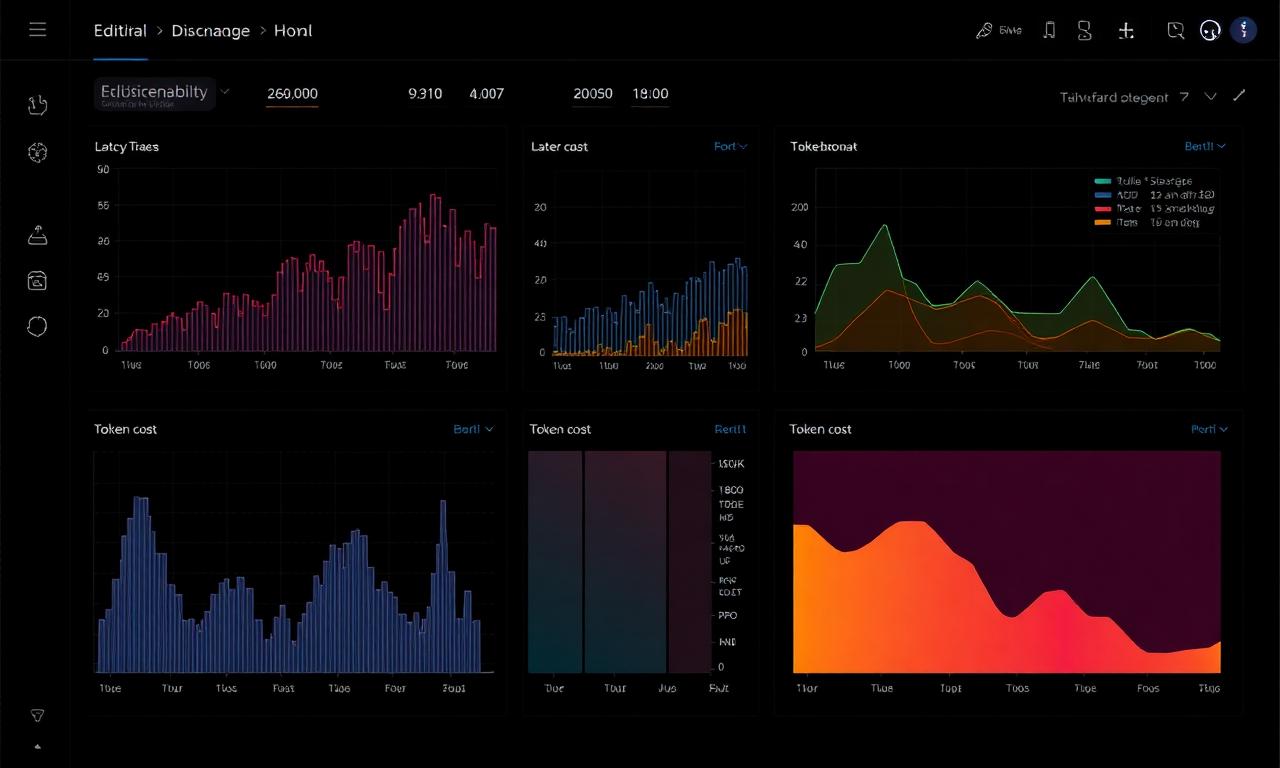
The best deployments treat retries as first-class events: logged, sampled for review, and connected to model-quality dashboards that flag when retry rates move.
“Every retry is a signal. Teams that treat them as noise are training themselves not to notice their model degrading.”
Testing what cannot be enumerated
Structured-output systems require a different testing posture than traditional software. Unit tests still matter for the parsing and validation code, but the interesting failures live in the model's behavior on adversarial inputs, edge-case schemas, and prompt drift over time. Property-based testing, fuzzed schema generation, and continuous evaluation against a held-out set of hard cases are the practices that separate reliable deployments from ones that surprise their operators.
The road to formal guarantees
The current frontier is combining structured decoding with formal specifications: not just 'this must be valid JSON matching this schema' but 'this must be a valid response given these preconditions.' Early work on model-checking LLM outputs and on differential testing between model versions is beginning to look like the missing rigor layer for production AI systems.
Key Topics
Extended Knowledge
- Vendor-native structured output APIs have matured but do not replace application-level validation.
- Retry-budget telemetry is one of the most underrated observability signals for LLM applications.
- Property-based and adversarial testing are becoming standard practice for high-stakes structured-output workflows.
Frequently Asked
Yes. Vendor guarantees cover syntax; your business rules and safety policies are on you.
Bounded and observable. Set explicit retry budgets per request and monitor how often they are exhausted.
Reducing validation logic after adopting structured outputs. The failure mode changes; it does not go away.