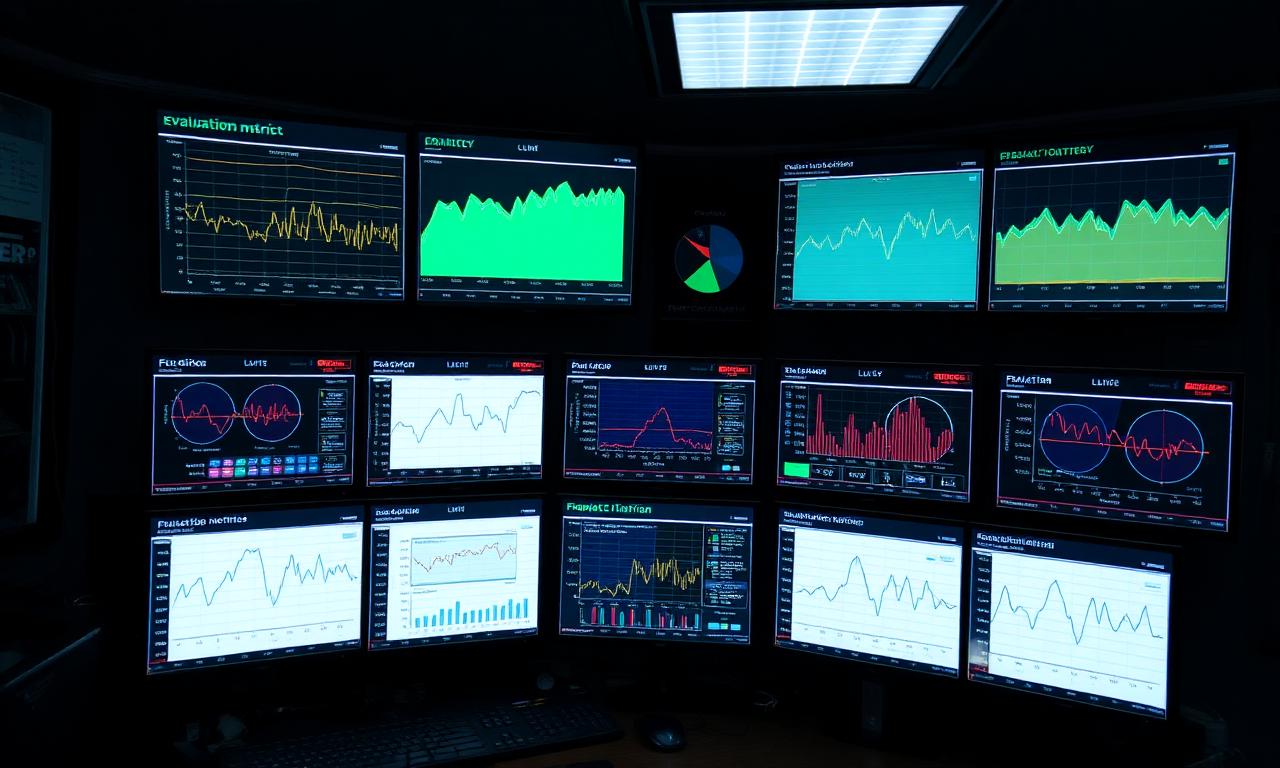
GPQA, MATH, ARC-AGI, Humanity's Last Exam — each was introduced as a stress test that would resist saturation for years. Each has been substantially eaten into within a single model generation. Understanding why is central to understanding how fast the field is really moving.
The saturation pattern
A benchmark is released with headline numbers: humans score 65%, current models score 20%. Twelve months later a new model release quietly logs 78%. The remaining errors are debated: are they genuinely hard problems, or ambiguous labels? A revision follows, and the cycle resets.
This is not unique to AI. Chess ratings, protein structure prediction, and speech recognition all followed similar arcs once compute crossed a threshold. What is different is the pace and the breadth: benchmarks that were designed to be resistant across cognitive domains fall together, not one at a time.
Three forces at once
First, models are getting better at reading test items. Much of what looked like reasoning failure in 2023 was really instruction-following failure. Cleaner alignment made previously unreachable questions accessible.
Second, test-time compute lets models trade latency for accuracy on hard problems. When a model can think for thirty seconds instead of one, error rates fall on exactly the questions benchmarks were designed to probe.
Third, evaluation datasets leak. Not necessarily verbatim, but structurally: benchmark styles get discussed in papers, mimicked in training data, and rediscovered by the model at inference time.
- Instruction quality gains explain most of the 2023–24 benchmark jump.
- Test-time reasoning explains most of the 2024–25 jump.
- Data leakage and format familiarity explain a smaller but persistent share.
What benchmarks still measure well
Saturation does not mean a benchmark is useless — it means the benchmark has finished doing its original job. GPQA is not a good discriminator of frontier reasoning today, but it remains a solid capability floor: any new model that fails it is not ready for production reasoning tasks. Treating benchmarks as tripwires rather than leaderboards recovers much of their value.
“A saturated benchmark is not a failed benchmark. It is a benchmark that has become a minimum requirement.”
The next generation of tests
The most credible new evaluations look less like exam questions and more like open-ended tasks with verifiable side effects: fix this real bug, reproduce this paper, solve this scheduling problem against a real API. These tests are expensive to construct and expensive to run, but they resist the pattern that killed static benchmarks — you cannot memorize your way through a task that requires actually acting on the world.
Expect the leaderboard era to give way to something closer to continuous evaluation: standing environments that models are dropped into, with humans grading the outputs. The result is less legible than a single number, but it tracks the capabilities that matter.
Key Topics
Extended Knowledge
- Static benchmarks age quickly once they enter public training corpora, whether directly or through discussion in papers and blog posts.
- Dynamic evaluations — SWE-bench Verified, AgentBench, and MLE-bench — attempt to resist saturation by grounding tasks in real environments.
- The rise of process-based evaluation, which scores intermediate reasoning steps, is a growing area of research.
Frequently Asked
No. Saturation on any single test says more about the test than the model. Real-world tasks with verifiable outcomes remain much harder than closed multiple-choice questions.
Look for evaluations with held-out test sets, dynamic construction, and verifiable outcomes. A score on a static, public dataset is a floor, not a ceiling.
Yes, as tripwires. If a candidate model fails a saturated benchmark, it will fail in production too. But do not choose between top models on leaderboard deltas — build your own evaluation.