Agent frameworks proliferated in 2023 and 2024, each with distinctive abstractions. In 2026, the ones still in active development have converged on a recognizable common core.
The converged core
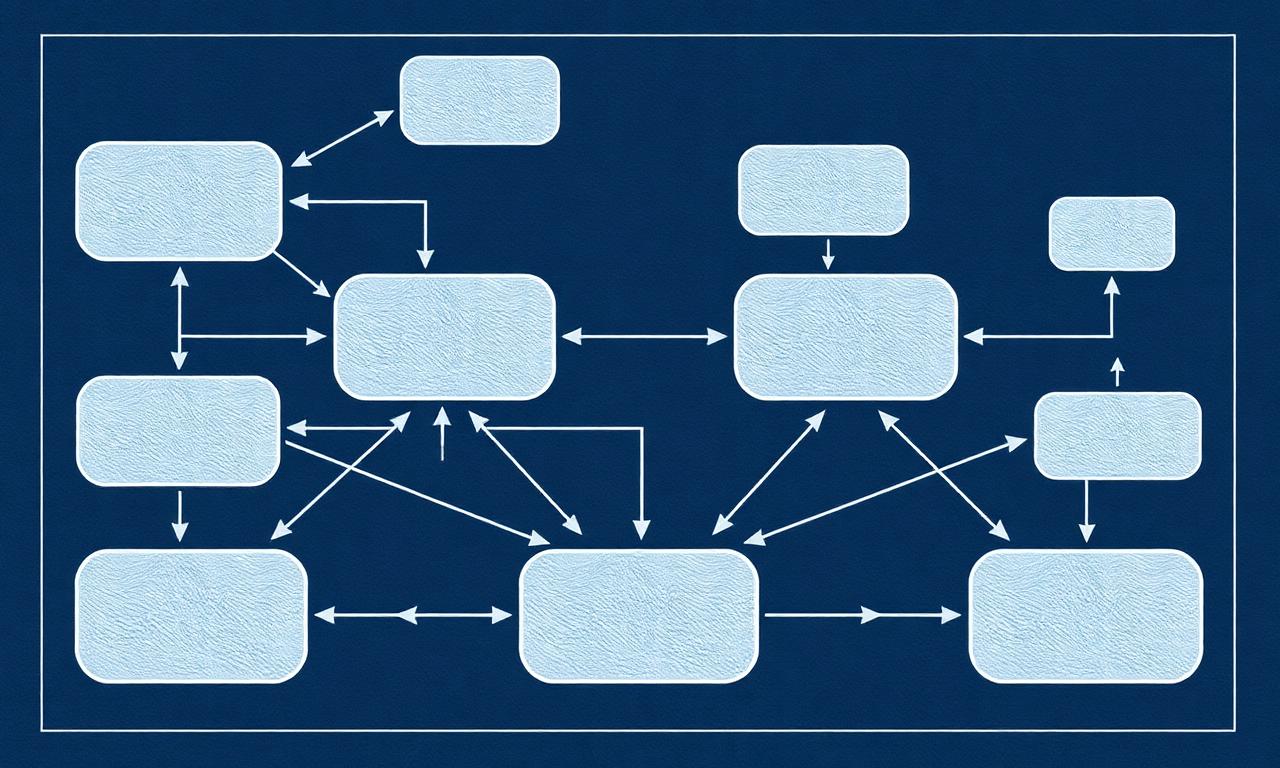
The shared design across modern frameworks looks like this: a planning loop that reasons about the next action, a tool interface that exposes capabilities as typed functions, a memory store that survives across steps, and an observability layer that captures every input and output for review. The names differ; the shapes agree.
- Typed tool schemas — every tool has explicit argument and return types.
- Stepwise loops that alternate reasoning and acting until a terminal condition.
- Persistent memory decoupled from the immediate context window.
- Observability captures every step, prompt, and tool call for debugging and replay.
What frameworks disagree on
The disagreements are meaningful. Frameworks split on how autonomous the planner should be (some prescribe the loop shape rigidly; others let the model plan freely). They split on whether tool execution is sandboxed by default. They split on how memory is structured — key-value, timeline, hierarchical. And they split on whether the framework should own the underlying LLM interface or delegate.
Roll your own vs adopt a framework
For simple, well-scoped agents — one tool, few steps — a framework is overhead. A hundred lines of your own code is more transparent and easier to debug. For complex multi-tool agents with persistent memory and rich observability requirements, a framework saves months. The question is not which framework but where in that spectrum your workload sits.
“The best agent framework for any given team is the one whose disagreements with your architecture are smallest.”
What to prioritize
Whatever you use, prioritize observability. Agents fail in ways that are impossible to debug without full step-by-step traces. Prioritize sandboxing. An agent that can call arbitrary code without isolation is a security incident waiting to happen. And prioritize evaluation. Agent quality drifts with model updates in ways single-shot LLM calls do not; you need continuous measurement to catch it.
Key Topics
Extended Knowledge
- Typed tool interfaces have become a de facto standard across major agent frameworks.
- Sandboxing tool execution — often via containers or WASM — is emerging as a best practice for anything beyond read-only tools.
- Observability requirements for agents typically exceed those of stateless LLM APIs by an order of magnitude.
Frequently Asked
Evaluate the ones with active development and strong observability. Popularity is a weaker signal than fit with your codebase and workflow.
For simple agents, yes. For complex multi-tool systems with persistent memory, adopting a mature framework saves substantial engineering time.
Record production traces, replay them against candidate versions, and compare outcomes. Live testing alone catches too little.